Bonito Fishing – High Speed, Great Action
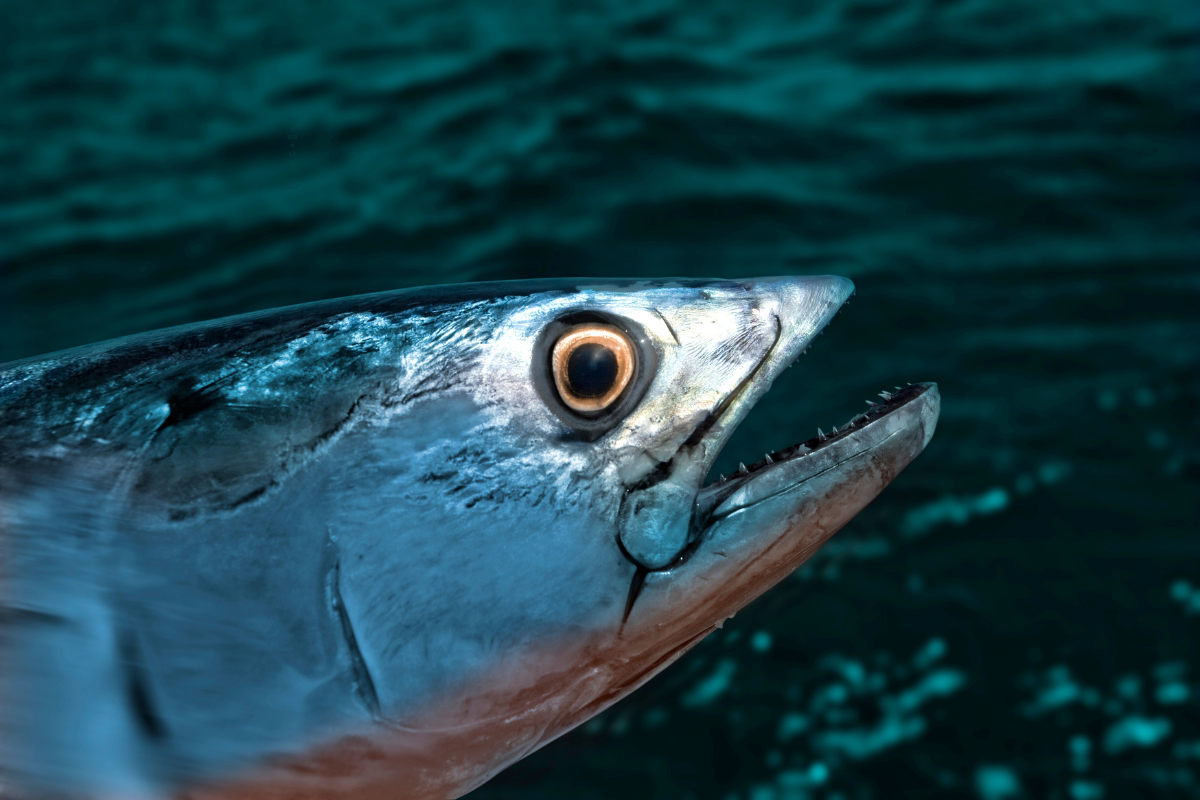
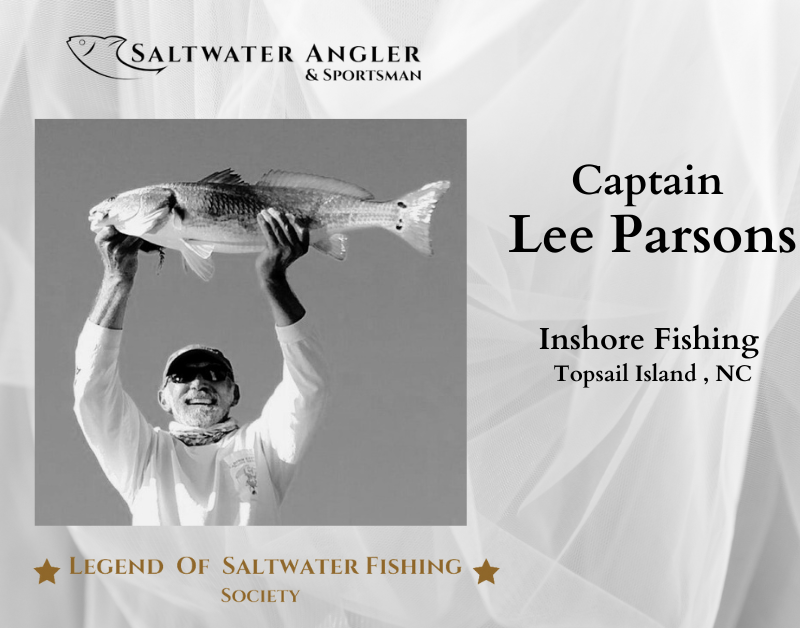
For the past several years, I make my annual pilgrimage to the guru of Bonito fishing off the Carolina Coast to Captain Lee Parsons of Wrightsville Beach. This yearly meeting has become a tradition for me and it’s one I never cease to enjoy. While Lee has a great perspective on all types of saltwater light tackle fishing, his advice on Bonito fishing is unsurpassed. Even though I can probably quote his advice for these silver speedsters chapter and verse I still love to sit down with him and hear it again. Each year I hear yet one more thing that can make Bonito fishing more effective and fun. His years of knowledge and passion for fishing never ceases to amaze me. He’s a true fishing purest that never slows in his pursuit of becoming better and more knowledgeable than the year before.
Again, this year Lee starts by reminding me that Bonito season starts at or near tax day or April 15th. That’s one way to think about it or better yet, the season fires up when and only when the water temp is right. That means when the water gets near 60 to 64 degrees. Bonito are sensitive to water temperature and this dictates how long they stay in the area. They always follow the cooler water of spring. Once it warms, they’re gone. This is usually only a range of a several weeks.
Another important factor is, don’t hit the water too late. Make sure you’re on the boat heading out before daylight. Having that second cup of coffee and catching the latest news can cost you a good day of Bonito fishing. You need to be making that first cast or trolling the minute the sun appears. The same is true with the evening. The best fishing will take place just before dark.
Look for the birds chasing the bait. This is the best indication that Bonito are nearby. Your chances will always be better over some type of structure and commonly a mile of 2 off the beach depending on the water temp. Once you’ve located a busting bait ball, ease your boat slowly to the ball and cast over it. Don’t speed up your boat or “run and gun” as it’s called. This will spook the bait and the Bonito will dive. If you’re trolling, troll around the perimeter of the bait ball so as not to scare the bait to the bottom. Remember, the bait is busting the surface due to the Bonito pushing them up from underneath. If the bait ball leaves the surface, just sit tight. They will likely come back up near where they dove from in a few minutes.
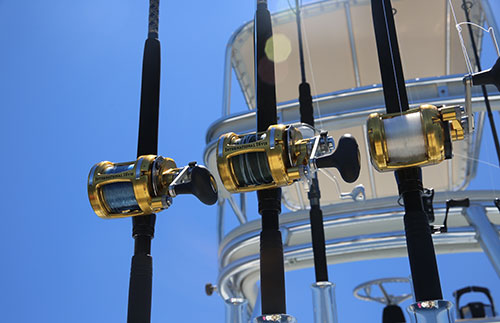
When it comes to tackle, Captain Lee prefers a 7’, medium action rod and a reel loaded with 15# braid line. “Using an 18” leader jig head with a curly tail, soft plastic is my “go to” lure.” He also likes to use the Crippled Herring and different variations of the Sting Silver line. When it comes to topwater, Captain Lee goes with Heddon’s Zara Spook. Just cast and use a fast retrieve. Then get ready to work your drag because once the fish hits, the spooling will begin. Slow the fish down, but not so much that it’ll break the line.
Trolling is a good tactic to locate the bait and the Bonito. Lures like Clark Spoons, various Yozuri lures and Pro-Troll Trout Killers in the ice pink color make for good trolling. Sting Silvers can also be added to that list of options. Just troll over the structure at about 5 knots and the next thing you know your drag is humming.
Again, watch your drag and expect a couple of runs. Have the net ready and enjoy the day.
You may be interested
Chapter Two…….. When Regulation Became the Solution to Every Problem
Tim Wilson - August 5, 2026For many fishermen along the North Carolina coast, the frustration with fisheries management did not happen overnight. It developed over years as they watched regulations increase while…
Changing Face Of Saltwater Fishing As Fall Arrives In The Carolinas
Tim Wilson - August 5, 2026As summer begins giving way to fall, saltwater anglers across the Carolinas know that one of the most important transitions of the fishing year is about to…
The Changing Face of Bass Fishing As Fall Arrives In The Carolinas
Tim Wilson - August 5, 2026For bass fishermen across the Carolinas, the arrival of fall marks one of the most exciting transitions of the year. The heat of summer begins to fade,…
Most from this category
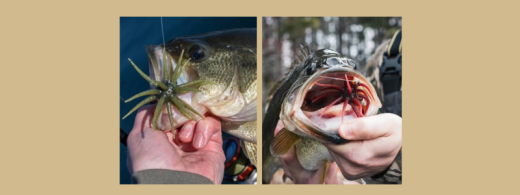
The Hottest Thing On Water…….Product Review: Berkley PowerBait MaxScent ‘Moeba
Tim Wilson - August 5, 2026
A System in Trouble…… How Decisions Changed the Future of Fishing….North Carolina Marine Fisheries….
Tim Wilson - July 31, 2026