Day of The Mahi….. Nearshore Fishing Tactics For Small Boat Anglers
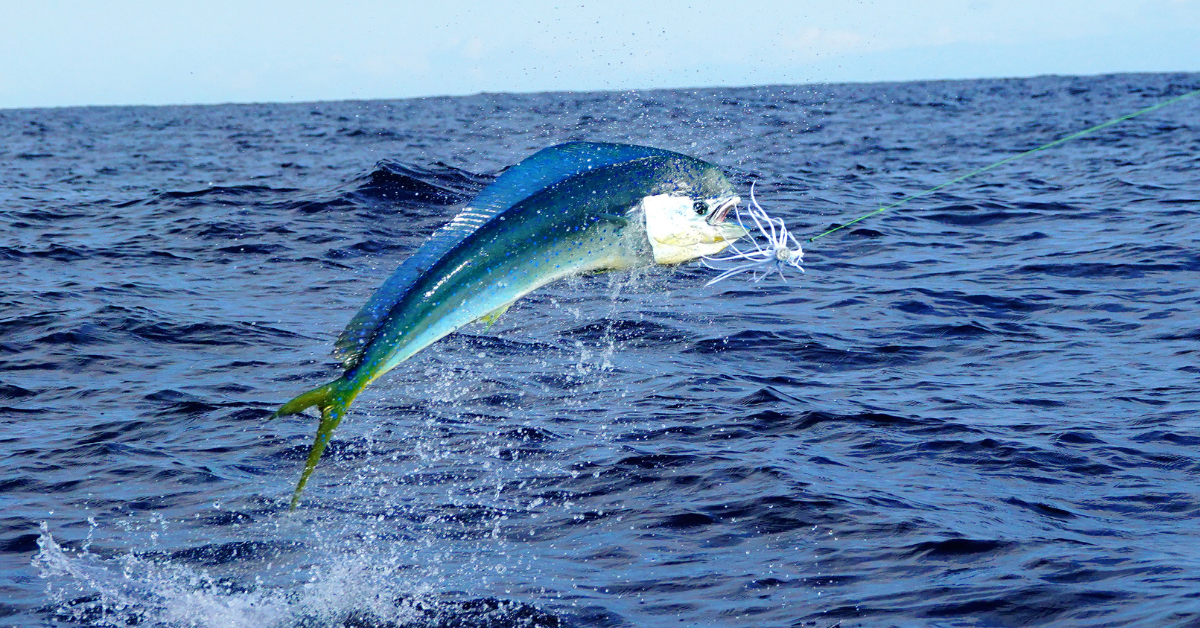
As the warmer weather progresses and the water temperatures continue to heat up, you’ll find larger Mahi will often follow the smaller ones closer inshore. The smaller Mahi, referred to as “Slingers” run in a school of around 20 and be as young as 2 years old weighing around 3-5 pounds, while the larger Mahi come in mostly groups of 3. I found that I have to treat these 2 categories differently when it comes to how I fish for them.
When I fish for the smaller “Slingers”, I rig up with a couple of spinning reels with a jig head and strips of menhaden, then cast out and start twitching the lure as I retrieve it. Make sure you have lots of bait because the smaller Mahi oftentimes will nibble the bait off the hook rather than committing and getting hooked up. As an alternative, I sometimes shift over to a 4 to 4 ½ Chugger-type lure with a 3 to 4-part daisy chain and troll with it at about 6-7 knots. The smaller Mahi will tear it up and the larger ones may hit it as well.
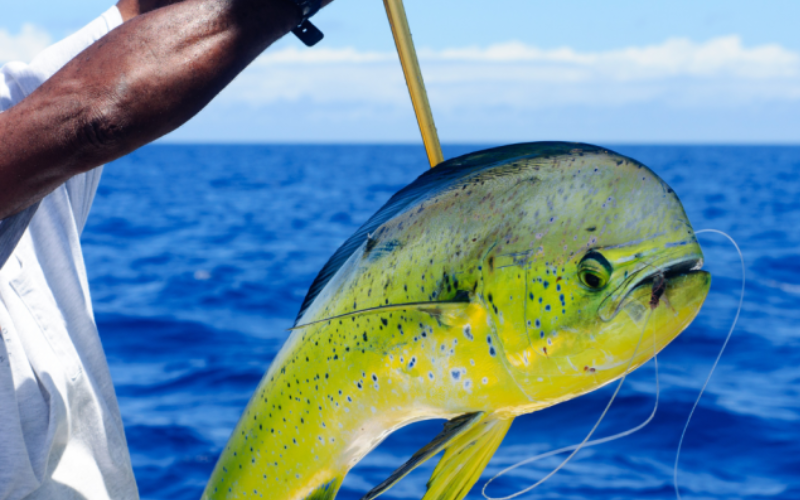
If you’re bottom fishing and you have chewed baits floating around the boat, you may find Mahi suddenly appearing. Throwing out additional chum will only improve your chances of getting more and larger fish. This is also increased by the action in the water from your bottom fish that will attract those Mahi in the area. Again, always have your spinning reel ready when the action starts. Just place a squid strip on it and start casting. Sometimes I use a ½ ounce jig head with a cigar minnow when the Mahi are bigger. I cast out 15-20 feet, allow the rig to sink a bit, and start reeling. Many times, the larger Mahi are swimming under the school of smaller Mahi which are working the same bait pod.
Look for grass beds. Mahi of all sizes like the shade these beds produce, however, grass beds will not attract the Mahi. Also, look for structure both on the surface and below. Things like buoys will attract Mahi. Remember, that the structure below is instrumental in locating the fish. The bottom structures are where smaller fish go for protection and the Mahi feed on them. So, take in these 3 main factors before going on your nearshore Mahi trip. 1) Find out where the water temps are in the right range. 2) Find locations with high levels of Chlorophyll. 3) Look for where the blue/green watercolor meets the dark blue.
Don’t wait too long to get out there. The best time is late spring through July, all depending on the water temperature and chlorophyll movement.

You may be interested
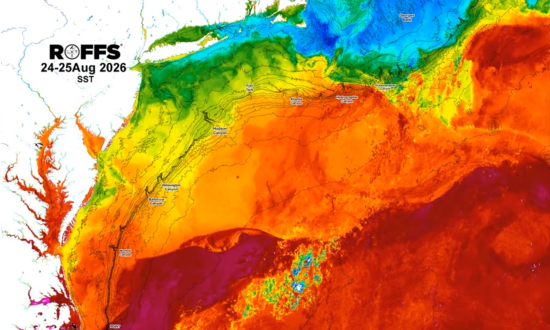
This Week’s Offshore Conditions Forecast
Tim Wilson - September 25, 2026The latest in offshore conditions. Click for full information. https://youtu.be/SZ3JnOloRHE?si=zuBbxUQhw3Gcah63 https://youtu.be/o03wbLuGckI?si=FL1jlf_-gvISsJ8O
Trust and the Future of North Carolina’s Fisheries……Chapter 6
Tim Wilson - September 24, 2026The conflict surrounding North Carolina’s marine fisheries has never been only about fish. For many fishermen, it is also about whether the people making decisions understand what…
An Angler Looks At 70
Tim Wilson - September 24, 2026Growing up in the foothills of North Carolina, fishing was a far cry from fishing on the Carolina coast. However, fishing in my early years is something…
Most from this category
Early Deer Season…. Why September Whitetails Require a Different Strategy
Tim Wilson - September 24, 2026
Follow the Bait….Follow the Bait: Why Finger Mullet Can Tell You Where the Fish Are
Tim Wilson - September 24, 2026