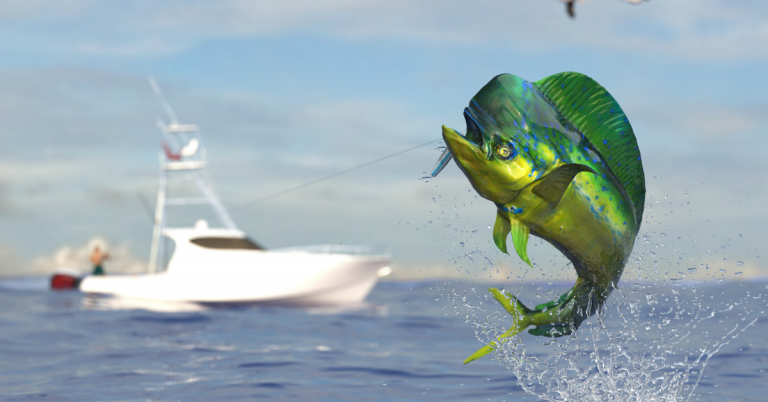
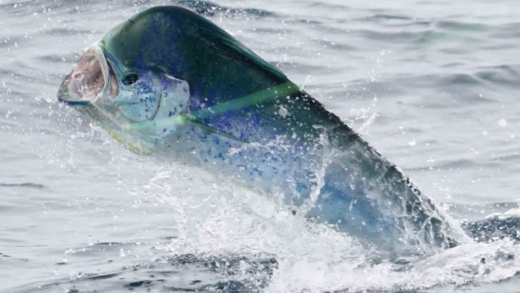
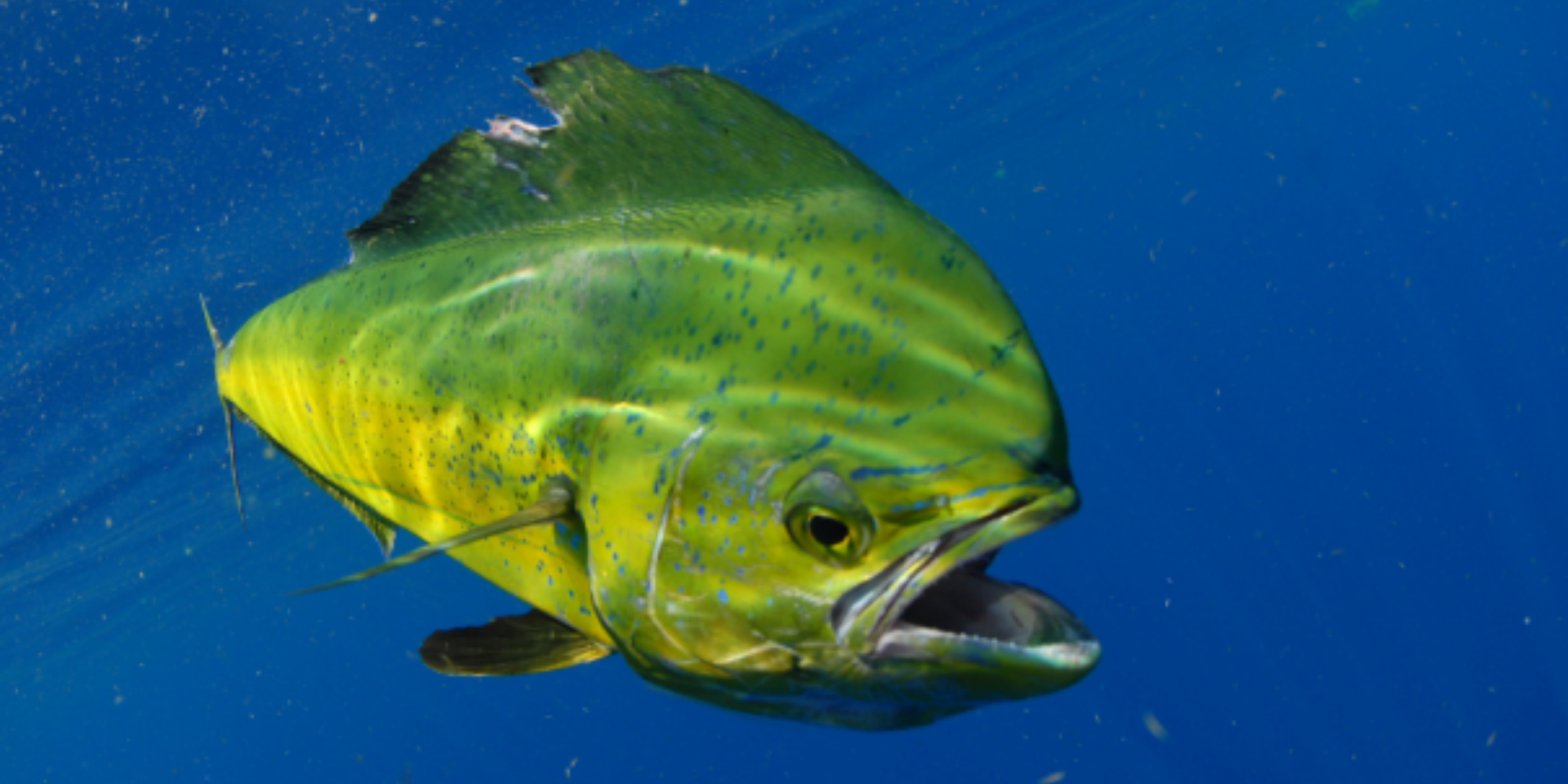
The Dolphinfish, known to anglers as Mahi, may be the most perfectly designed gamefish in the ocean. Brilliant gold, electric blue, and vivid green, it looks like it was built to run the cobalt waters of the Gulf Stream and hunt the drifting lines of sargassum that define its world.
But this fish is far more than just beautiful, it’s built for survival, speed, and constant motion.
Found throughout tropical waters, Mahi make a predictable and highly anticipated migration along the Southeast coast each year. In spring, they push north from the Caribbean, riding the Gulf Stream toward the Carolinas and beyond. By summer, they can be found well into the Mid-Atlantic, following warm water, bait, and the instinct to spawn.
That migration often aligns with the first full moon after the March equinox, a subtle but consistent rhythm in their movement.
Mahi are one of the fastest-growing fish in the ocean, living only about four years. A 50- to 70-pound bull is often just that age. They begin spawning early and continue throughout their short lives, a key reason the fishery has remained strong and sustainable.
They are relentless feeders. Juveniles travel in schools, feeding on small fish and crustaceans, while adults become more solitary and aggressive, taking on larger prey like flying fish, squid, ballyhoo, and mackerel. Wherever there is food, Mahi won’t be far behind.
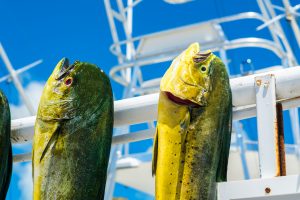
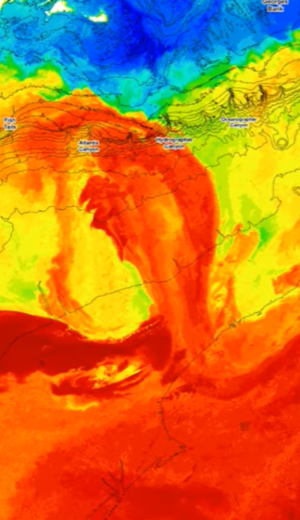
They are most often found along current edges, weed lines, floating debris, and temperature breaks, places where life concentrates in the open ocean.
As summer water temperatures climb into the mid-70s, Mahi often push closer to shore, showing up along nearshore structure and live-bottom areas in 60- to 90-foot depths. When the right water meets the right structure, both offshore and nearshore fishing can be exceptional.
Their mobility is unmatched. Tagging studies show Mahi commonly travel 30 to 50 miles a day. Some have moved from South Florida to New England in just weeks. Others may cross large portions of the Atlantic in a single year. They are constantly adapting, hunting within an environment that never stops moving.
And then there’s the moment every angler remembers, the color.
When a Mahi lights up behind the boat or changes shades during the fight, it’s something you don’t forget. That flash of gold and blue across clear water is part of what makes this fish so special.
Management of the species falls under regional fishery councils, with regulations that continue to evolve as anglers and scientists work to protect the resource. It’s a shared fishery, and like all great fisheries, it depends on responsible decisions on the water.
That responsibility goes beyond the rules.
Releasing smaller fish, even when legal to keep, helps protect the future. Those “peanuts” are not only tomorrow’s gaffers, they are also critical forage for species like Blue Marlin and Wahoo.
So when you head offshore, fish with intent.
Look for clean blue water, temperature breaks, weed lines, and bait. When those elements come together, you’re in the right place.
And when the rods go down, take a second to appreciate what you’ve found, one of the finest gamefish in the ocean, perfectly built for the life it lives.
Story by: Captain Chip Berry….Updated by: Angler & Sportsman Team