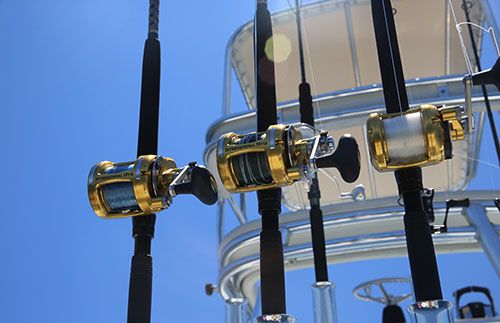
Tarpon, Chasing the Silver King
Few fish inspire anglers like the Atlantic tarpon. Mention the word tarpon around a group of fishermen and the conversation quickly turns to explosive strikes, long screaming runs, and spectacular leaps that seem to defy gravity. Few fish have earned the nickname “The Silver King” more honestly.
Although adult tarpon bear little resemblance to them, they are actually close relatives of eels. During their earliest stages of life the relationship becomes much more obvious, as young tarpon begin life as transparent, ribbon-like larvae similar to those of eels.
Atlantic tarpon are found from North Carolina south through Florida, the Gulf of Mexico, the Caribbean and as far as Brazil. They have also become established along portions of the Pacific coast of Central and South America. These impressive fish can exceed eight feet in length and commonly weigh between 25 and 80 pounds, although much larger fish are caught every year.
North Carolina has produced its share of giants. The current state record was landed in 2008 from the Sea View Pier at North Topsail Beach and weighed an incredible 193 pounds, 5 ounces.

Built for Survival
According to fisheries researchers with the Bonefish and Tarpon Trust, tarpon occupy nearly every type of coastal habitat, including estuaries, marshes, tidal creeks, freshwater rivers, mangrove shorelines and the open ocean.
Unlike most gamefish, tarpon possess a modified swim bladder that allows them to gulp air at the surface. This remarkable adaptation enables them to survive in waters with very low oxygen levels where many other species could not.
They are tropical fish but routinely migrate north into North Carolina during the warmer months. Water temperature largely determines their seasonal movements because tarpon cannot survive prolonged exposure to temperatures below 50 degrees.
An Amazing Beginning
Tarpon spawn offshore between May and August, often around the full moon. Large schools gather in deep water where anglers sometimes observe them swimming in large rotating circles known as a “daisy chain.” Scientists believe this behavior is associated with spawning activity.
Females release millions of eggs into open water where fertilization occurs. Large females may produce more than 12 million eggs during a single spawning season and may spawn several times.
Within about 24 hours the eggs hatch into tiny transparent larvae. For nearly a month these ribbon-shaped youngsters drift with ocean currents while feeding on microscopic organic material known as marine snow. Wind, tides and even hurricanes can help transport these fragile larvae toward coastal estuaries where they eventually transform into juvenile tarpon.
One of the most fascinating aspects of tarpon biology is that the larvae actually become smaller before growing larger. As they develop fins, scales, jaws and internal organs, they use stored body energy to fuel the transformation. Within several weeks they begin resembling miniature tarpon complete with brilliant silver scales.
Tarpon generally reach sexual maturity between seven and twelve years of age and are capable of living more than 80 years.
Feeding the Silver King
Tarpon are aggressive predators that feed both day and night. Their menu varies depending on location but commonly includes needlefish, pinfish, mullet, shrimp, crabs and many other baitfish. Their explosive feeding style and tremendous strength make them one of the world’s premier sport fish.
Divers frequently encounter tarpon around Caribbean reefs where these giants often show little fear of people. Swimming beside a six or seven-foot tarpon is an unforgettable experience that provides a true appreciation for both their size and graceful movements.
Conservation Matters
Although tarpon are highly prized by recreational anglers, North Carolina currently has limited harvest regulations. Commercial sale of Atlantic tarpon is prohibited, and fisheries managers have proposed changing the current recreational harvest allowance from one fish per day to catch-and-release only.
Research conducted by the Bonefish and Tarpon Trust has shown that many tarpon migrate into North Carolina each summer before continuing seasonal movements throughout the southeastern United States. Because these fish travel through multiple states during their annual migrations, successful conservation depends upon coordinated management across state boundaries.
Currently, only Florida and Virginia require mandatory catch-and-release regulations. If North Carolina adopts similar rules, it would become one of the leading states protecting this unique fishery.
Catch and Release Done Right
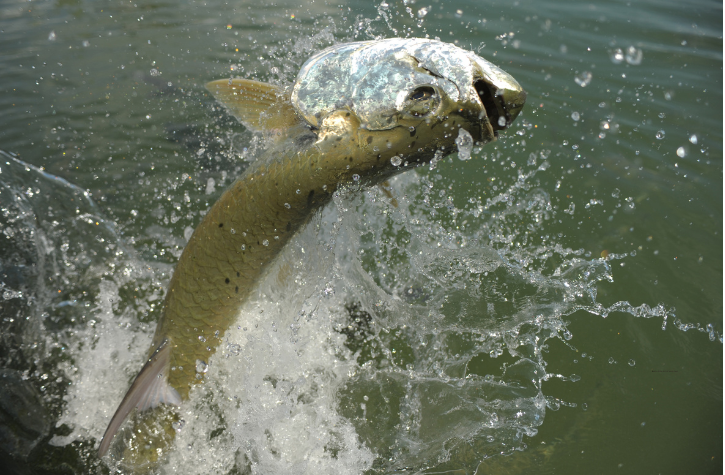 Proper handling is essential to ensuring released tarpon survive.
Large tarpon over 40 inches should never be removed from the water. Their weight places tremendous stress on internal organs when lifted, greatly reducing survival rates. Keep the fish alongside the boat, remove the hook quickly and release it as soon as possible.
For smaller tarpon, always use wet hands and minimize handling to protect the fish’s natural slime coating. If photographs are desired, have the camera ready before lifting the fish and return it to the water immediately afterward.
Circle hooks are recommended whenever natural bait is used because they greatly reduce deep hooking. If a hook cannot be removed easily, simply cut the leader close to the hook. Research has shown this causes far less damage than attempting to remove a deeply embedded hook.
Fight fish with tackle heavy enough to shorten the battle. Long fights exhaust tarpon and leave them vulnerable to sharks and other predators after release. If sharks begin following hooked fish, moving to another location is often the best option.
Easy to Recognize
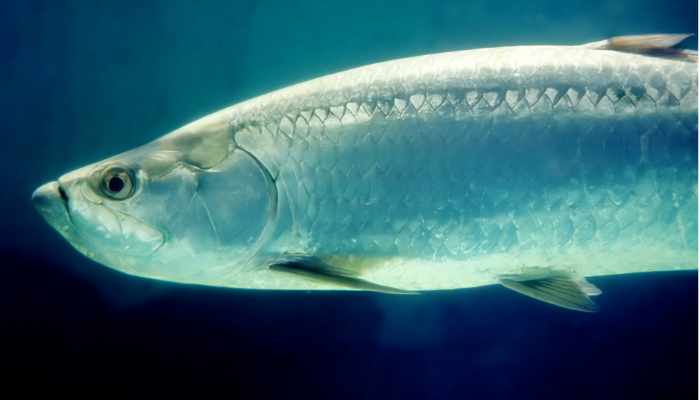
Few fish are as distinctive as the Atlantic tarpon. Their enormous silver scales shimmer like polished armor in the sunlight. They possess a huge upward-facing mouth designed for engulfing prey, a deeply forked tail built for speed, and a long trailing filament extending from the rear of the dorsal fin.
Whether seen rolling along a quiet marsh edge, crashing bait on an ocean beach, or launching completely out of the water after taking a fly, the Silver King remains one of the most magnificent gamefish visiting North Carolina waters each summer. For anglers fortunate enough to hook one, it is an experience they will never forget.
You may be interested
Bass Fishing….Beating the Cold
Tim Wilson - November 24, 2026When the water temperature slips into the 40s, largemouth bass don't disappear. They slow down. Their metabolism drops, they move less, and they won't chase a bait…
Cold Water, Big Stripers..Fishing the Dams in the Carolinas
Tim Wilson - November 23, 2026When water temperatures fall into the 40s and 50s, most anglers park the boat under a tarp. The ones who know better head for the dams. Striped…

Where the Big Bucks Live….Deer Hunting the Carolinas
Tim Wilson - November 22, 2026Ask a dozen Carolina hunters where the best deer hunting is, and you will get a dozen answers, each delivered with the quiet certainty of a man…
Most from this category