Gone but Not Forgotten….. The Carolinas’ Classic Boatbuilders
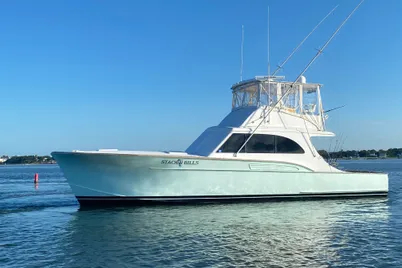
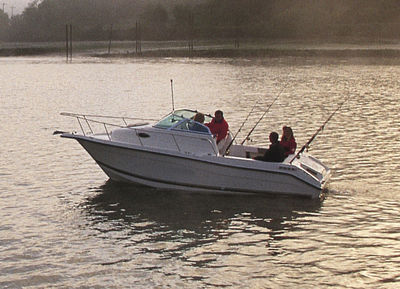
Walk any marina from Manteo to Charleston and you’ll still see them: older hulls with names on the transom that no factory builds anymore. The Carolinas have long been among America’s great boatbuilding regions, and part of that legacy now lives only in used-boat listings and dockside memories.
Buddy Davis: The Wanchese Original
No name carries more weight in Carolina sportfishing. Buddy Davis designed and built Carolina-style sportfishermen from 28 to 78 feet, and his boats were known for exaggerated bow flare and a deep forefoot that softened head seas and knocked down spray. His family says he built about 400 yachts over a 45-year career. He died in 2011, and the name later passed to other owners, but a true Wanchese-built Buddy Davis remains its own breed.

Carolina Classic: An Edenton Family Story
Mac Privott partnered with J. Scott Harrell Sr. at Albemarle in the late 1970s, then left in 1991 to found Carolina Classic Boats. For 25 years, Carolina Classic express boats earned a loyal Gulf Stream following. Eventually their owner merged the two brands into one company, Albemarle Boats, The Carolina Classic. Albemarle carries on, but Carolina Classic as its own nameplate is gone.

Cabo: The Transplant
Founded in California in 1991, Cabo was bought by Brunswick in 2006, and its production moved into the Hatteras plant in New Bern in 2010. By 2014, the company was pouring its New Bern resources into new Hatteras models instead, and today Cabo lives on mostly through used boats

Glassmaster: Columbia’s Fiberglass Pioneer
South Carolina’s story starts inland. Glassmaster Plastics in Columbia was one of the first companies to experiment with fiberglass boats, starting in 1958, and over the next 32 years averaged more than 1,000 boats a year. For a generation of Southern families, a Glassmaster runabout was their first boat.

Renken: Charleston’s First Fiberglass Builder
On the coast, Ralph Renken bought the Halsey Boat Company, a wooden-boat builder, in 1958 and declared he was bringing fiberglass boatbuilding to Charleston. The company no longer exists, but the Renken name still carries weight in the industry, and the Lowcountry boatbuilding boom that followed owes it a debt.
A Personal Note
In so many ways, these boatbuilders were innovators. Building boats was in their blood, and it never left. Many of them became my friends as I traveled the East Coast during my years as vice president of Sea Tow Services International. I think of them often and will never forget their kindness, their professionalism, and their willingness to teach a boy from the foothills of North Carolina about some of the greatest boats ever made. I miss each and every one.

You may be interested
Fishing the Jetties…. Read the Water, Work the Rocks
Tim Wilson - October 29, 2026Jetties bring together three things fishermen look for: structure, moving water, and food. Along the Carolina coast, these rock walls help stabilize inlet entrances and direct tidal…

Cold Water, Hot Bite: Late Fall Inshore Fishing in the Carolinas
Tim Wilson - October 29, 2026Every November there’s a morning when the air bites differently. The marsh grass has gone gold, the mullet are gone, and the water is clear enough to…
Best Winter Fishing Spots in Charleston, SC
Tim Wilson - October 27, 2026Charleston’s winter fishing is one of the Lowcountry’s best-kept secrets. When the summer crowds disappear and water temperatures drop into the 50s, the creeks clear up, redfish…
Most from this category
The Final Chapter…… Protecting the North Carolina Estuaries and It’s People
Tim Wilson - October 22, 2026
One Fish, Four States: How North Carolina’s Flounder Compare to Its Neighbors
Tim Wilson - October 22, 2026