From Spanish to Kings….How Long Will the Nearshore Mackerel Bite Last?
September may signal the beginning of fall, but Carolina ocean waters don’t suddenly cool because the calendar changes. For fishermen targeting Spanish and king mackerel, that means some excellent nearshore opportunities can continue well beyond the end of summer, particularly when warm water and abundant bait remain close to the beaches.
Along southeastern North Carolina, Spanish mackerel can remain active from Topsail and Wrightsville Beach south past Carolina Beach and the mouth of the Cape Fear River. Inlets, tidelines, artificial reefs and concentrations of bait can all produce fish. Early mornings are particularly good times to look for birds working above feeding schools or Spanish cutting through bait near the surface.
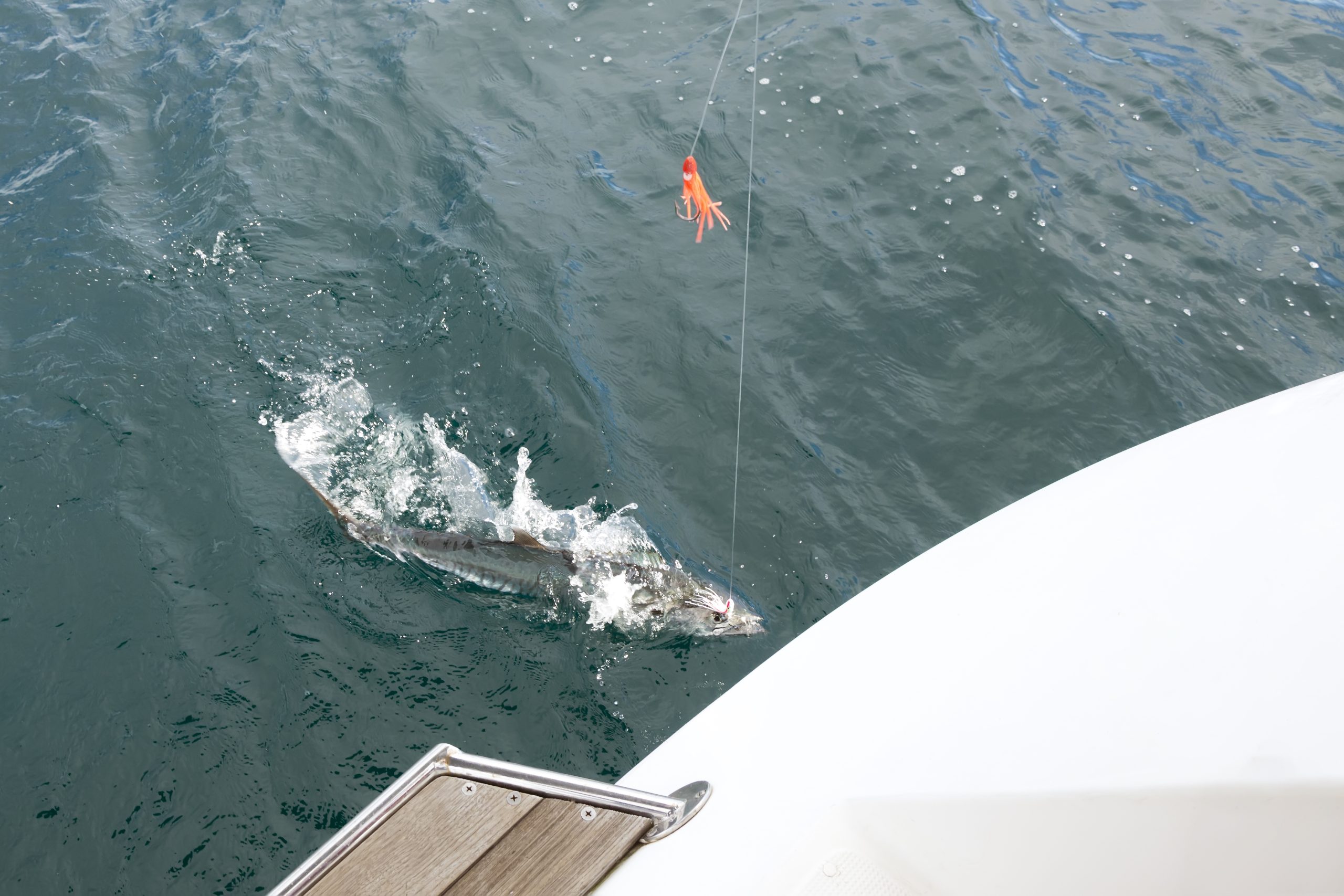
Small trolling spoons remain one of the simplest ways to locate Spanish because they allow fishermen to cover water. Once an active school is found, casting small metal lures can produce fast action. The key is avoiding the temptation to run directly through feeding fish. Approaching from the side and keeping the boat outside the main concentration can keep the school active longer.
King mackerel present a different challenge. September and October can be excellent months for kings because menhaden and other baitfish remain abundant around beaches, inlets and nearshore structure. Slow trolling live menhaden is a Carolina tradition for good reason. Kings may also be found around artificial reefs and areas of live bottom where bait gathers.
The waters off Wrightsville Beach and Carolina Beach provide access to numerous nearshore structures. Fishermen leaving through the Cape Fear River can work areas around the river entrance and toward Frying Pan Shoals. Farther north, Topsail fishermen have their own collection of reefs, ledges and bait-rich nearshore water.
South Carolina offers similar opportunities from Little River and the Grand Strand through Georgetown and Charleston. Warm water often persists well into fall, allowing mackerel fishing to continue as long as the forage remains available.
What eventually changes the pattern isn’t a particular date. Water temperature, cold fronts and bait movement determine how quickly the fish transition. Spanish generally become less dependable as conditions cool substantially, while king mackerel can remain available longer when suitable water and food remain in the area.
That makes fishing reports from farther north surprisingly useful. A significant change around Morehead City may provide an early indication of what fishermen around Wrightsville Beach could see next. Changes along the Cape Fear coast can offer similar clues for fishermen around the Grand Strand.
September isn’t the time to put away the mackerel tackle simply because summer vacation has ended. In many years, reduced boat traffic and abundant fall bait can make this one of the more enjoyable periods to fish. As long as the water remains right and bait stays nearby, Carolina fishermen still have a very good chance of hearing a reel scream.
You may be interested
Welcoming The Early Deer Season
Tim Wilson - September 17, 2026September deer hunting bears little resemblance to hunting the rut in November. Carolina whitetails haven't suddenly abandoned their normal routines to search for does, and hunters who…
Where To Find Black Drum This Fall
Tim Wilson - September 17, 2026When Carolina fishermen begin discussing fall inshore fishing, redfish and speckled trout usually dominate the conversation. Black drum rarely receive the same attention, even though they are…
September Speckled Trout…… The First Signs of the Fall Bite
Tim Wilson - September 17, 2026Fall speckled trout fishing is one of the traditions that Carolina inshore fishermen look forward to every year. Most people associate the best trout fishing with genuinely…
Most from this category