What Is an Estuary and Why Are They Important?
Next week, the Atlantic States Marine Fisheries Commission (ASMFC) will hold its annual meeting in Dewey Beach, Delaware. Aside from history buffs who know the town was named after George Dewey, the only person in U.S. history to hold the title Admiral of the Navy, why should any of us care? And what exactly is the ASMFC?
Fisheries management along the coast is complicated. Many marine and estuarine fish travel through multiple jurisdictions—up rivers, through sounds, and along the coastline from Maine to Florida.
In North Carolina, fisheries decisions involve two state agencies, a federal commission, two federal councils, and several advisory committees. To help make sense of who manages which species and where, our foundation has created an interactive map that clearly illustrates the management structure.
If you’re not familiar with the ASMFC, explore the map to learn how this federal entity manages more than 20 fish species found in our state’s coastal waters, from the shoreline out to three miles offshore. At next week’s meeting, representatives from every state on the Atlantic coast will discuss management plans that matter to us here at home, including those for red drum, striped bass, black drum, croaker, and speckled trout.
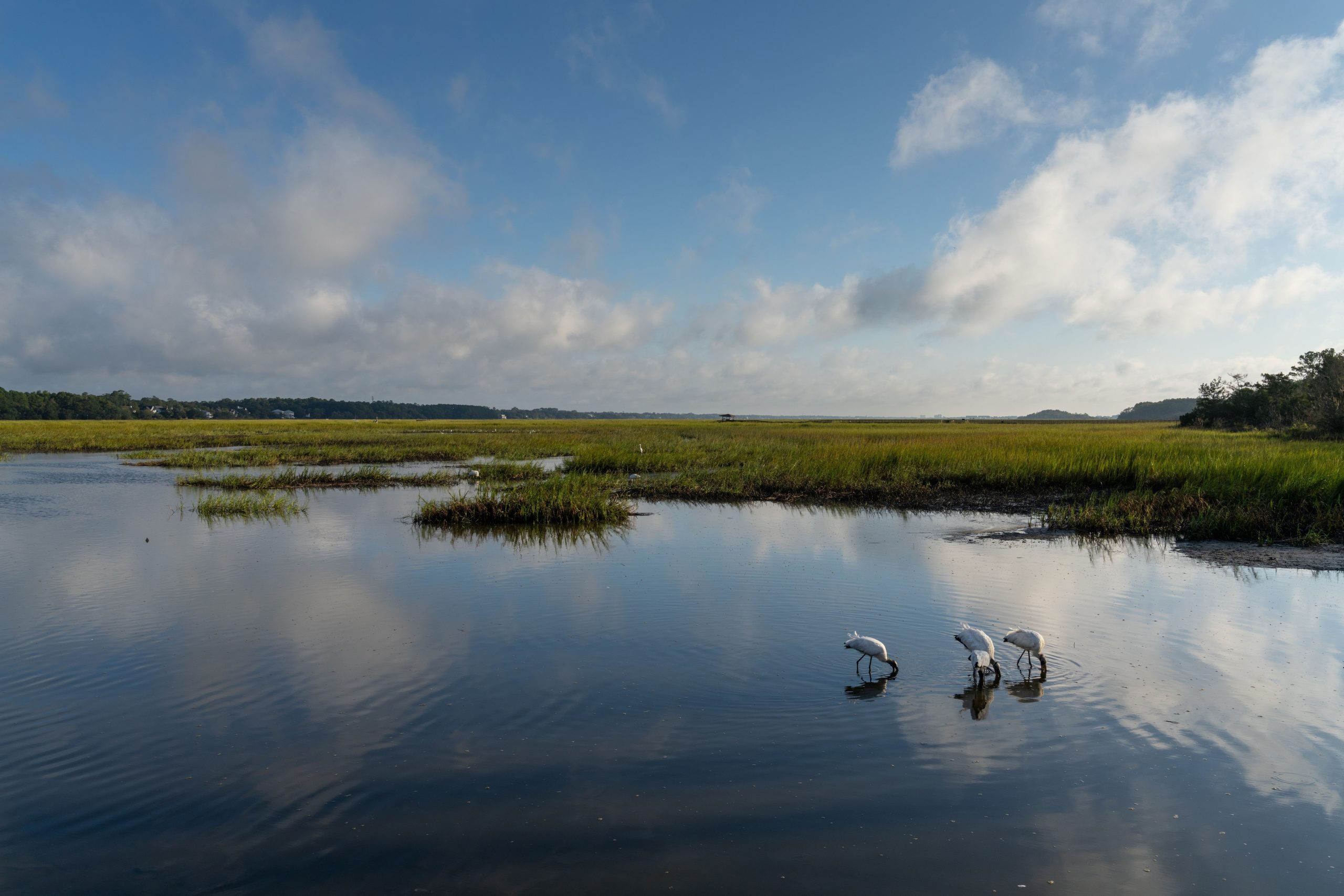
What is an estuary? That is the question we oftentimes get when we first introduce someone to our foundation, and the answer is quite simple. An estuary is a body of water that forms when freshwater from a river or stream mixes with saltwater from the ocean. North Carolina alone is home to nearly 2.2 million acres of estuarine waters, making it one of the largest systems in the country.
But an estuary is more than just brackish water. It’s a diverse ecosystem that has significant ecological and economic value.
Ecological Value
Estuaries are among the most productive ecosystems on Earth. The lush plant life found in marshes and seagrass beds creates sheltered habitats that serve as nurseries for key forage species and vital invertebrates. These species support prized recreational and commercial species, while the habitats provide natural coastal defense by mitigating the damaging effects of storm surge and flooding.
Economic Value
These rich, sheltered waters help power our food system. Nationally, estuaries provide nursery grounds for 75% of the fish and shellfish we eat. In North Carolina, they help sustain more than 40,000 jobs, ranging from seafood harvesters and fishing guides to boat builders and marina crews.
North Carolina’s estuaries are beautiful coastal ecosystems that sustain diverse wildlife, enrich local economies, and support residents and visitors alike. To learn more about our estuaries, click here to gain a deeper understanding of how they form, recognize their ecological significance, and appreciate their economic contributions.
With Halloween right around the corner, there’s no better time to highlight some fish with nicknames as spirited as the season itself. From pumpkins to ghosts, here’s a look at what we think their next costume should be.

Red Drum – Pumpkin
While not a widely used nickname for North Carolina’s state saltwater fish, some anglers refer to red drum as “pumpkins” in the fall. It’s easy to see why, with the bronze coloring and impressive size of adult red drum.
Sheepshead – Convict
If their human-like teeth weren’t criminal enough, the sheepshead’s bold black and white stripes earned it the nickname “convict fish.” Luckily for them, they’re already dressed for the part in their built-in prison jumpsuit.
Bluefish – Elf
This aggressive predator is channeling some Christmas cheer a couple of months early. Known as “elf” primarily in South Africa, the bluefish could certainly pull off the look with some pointy shoes and a jolly demeanor to match the name.
Bonefish – Ghost
What better nickname for a bonefish than “ghost?” With their silvery camouflage and lightning-fast speed, they’re here one moment and gone the next.
For More Information Click Below
You may be interested

This Week’s Offshore Conditions Forecast
Tim Wilson - September 11, 2026The latest in offshore conditions. Click for full information. https://youtu.be/yJWJ_XJ7Aug https://youtu.be/b0SJPKj3fN8
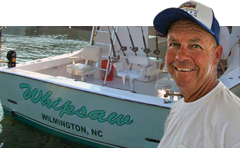
A Carolina Coast Fishing Icon Passes….Captain Robbie Wolve
Tim Wilson - September 11, 2026The Carolina fishing community lost one of its own with the passing of longtime charter fisherman Captain Robbie Wolfe, who died peacefully at his Wilmington home on…

Catching GIANT Flounder Around Docks in NORTH CAROLINA
Tim Wilson - September 11, 2026Flounder are masters of disappearing, but Capt. Jot Owens knows exactly where to look. C.A. Richardson heads to Wrightsville Beach, North Carolina, to join renowned inshore guide…
Most from this category