How Fish Find Their Way Home: Navigation, Memory, and Site Fidelity
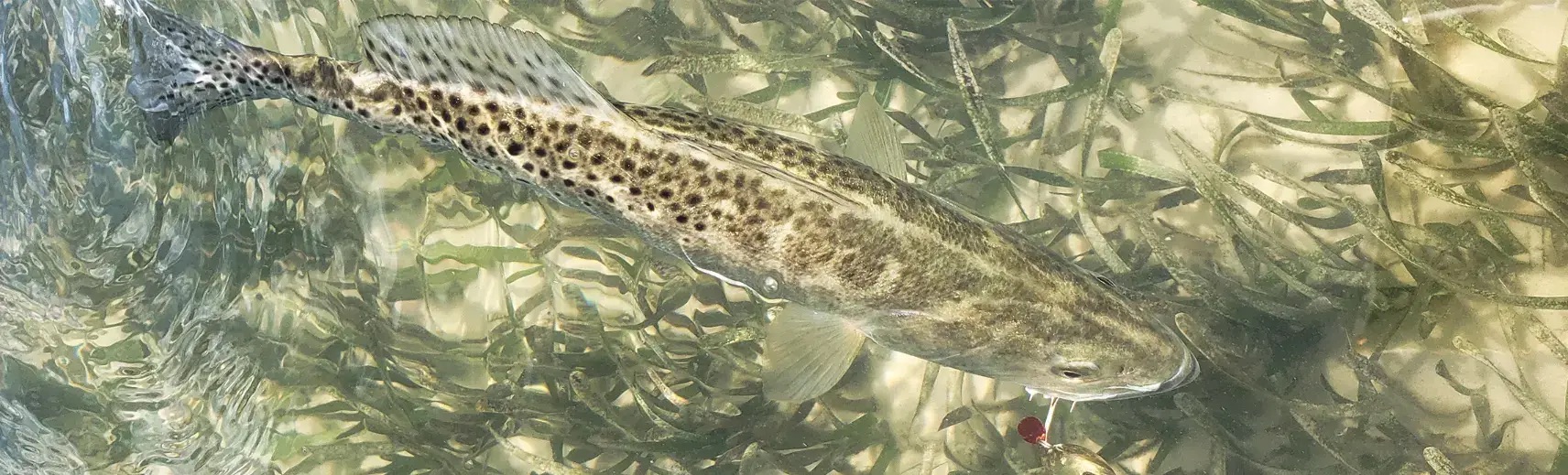
Every spring, red drum return to North Carolina’s coastal sounds. Not just to the state, but to specific sounds, creek mouths, and even the same stretches of marsh. Data from our Foundation’s satellite tagging project is confirming what many have long suspected: individual fish revisit the same estuarine areas year after year with a consistency that feels less like wandering and more like going home.
This pattern is known as site fidelity, and it raises an intriguing question. How does a fish that may spend the winter hundreds of miles offshore find its way back to the same patch of estuarine water months later? The answer lies in a mix of biological tools refined over hundreds of millions of years.
One of those tools is the Earth’s magnetic field. Some fish can detect subtle magnetic gradients and use them to orient across open water, giving them a built-in sense of direction that works much like a compass. Scientists are still working out how widespread this ability is, but the evidence continues to grow, especially among highly migratory species.
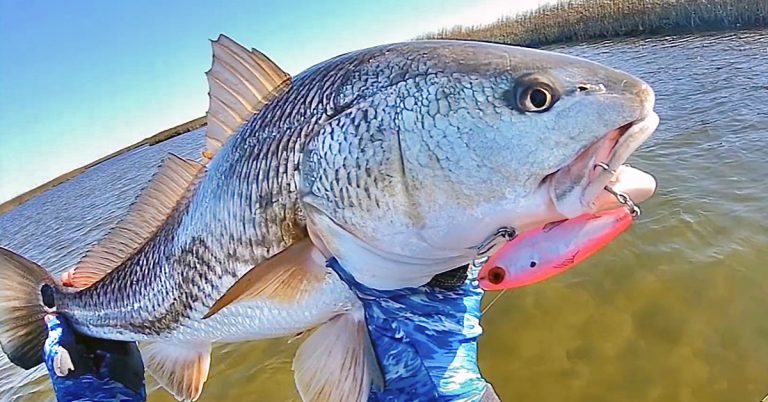
As fish get closer to home, another sense takes over. Smell plays a powerful role in the final stage of the journey. Fish can detect chemical signatures in the water at incredibly low concentrations, and young fish appear to learn the unique chemical fingerprint of their home estuary early in life. When they return as adults, they follow those familiar cues back to where they started. This process, known as olfactory imprinting, has been well documented in salmon and is increasingly observed in species such as red drum and speckled trout.
Experience matters too. Fish that have made the journey before seem to build a mental map over time. Currents, temperature changes, and the shape of the coastline may all serve as cues that they recognize and reuse. Younger fish likely rely more on instinct and broad orientation, while older fish refine their routes with each migration.
Taken together, these abilities form a remarkably effective system for finding home. But what makes this behavior so compelling is not just how it works, but what it means for the waters these fish return to year after year.
Courtesy of

You may be interested
Bonito Fishing For Rookies
Tim Wilson - April 8, 2026There are days along the North Carolina coast when the ocean looks calm, almost too calm, like it’s hiding something. Then, out of nowhere, it happens. Birds…
Bulls Bay, South Carolina…..A Different Fishing World
Tim Wilson - April 8, 2026I’ve spent enough time in Bulls Bay to know one thing for certain, it’s not a place you just show up and fish. You learn it, or…
How the Moon Phase Impacts Inshore Fishing
Tim Wilson - April 7, 2026The spring and early summer months are a time of the year when the inshore goes thru a transition period. It's when the fish come out of…