False Albacore On the Fly……Pure Fishing Fun
You can always tell when fly anglers along the Crystal Coast are getting excited. You can see it when they’re walking around town or driving down the road, they’re just counting all the yellow butterflies. A little bit of north wind, slightly cooler temperatures and yellow butterflies mean one thing… it’s albie time.
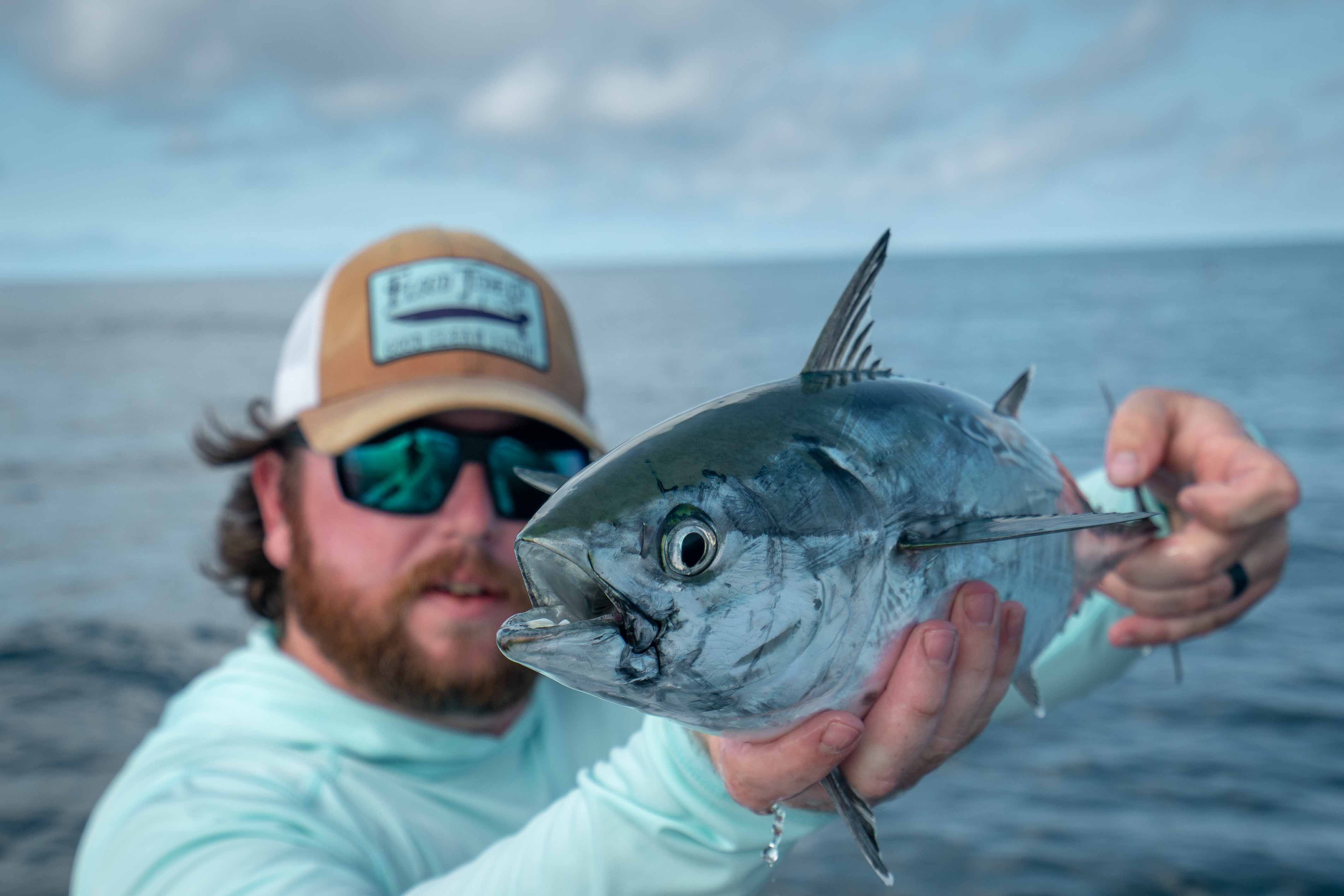
If you’re a fly angler along the eastern shore, you know there’s nothing like the pull of a false albacore. Crushing bait balls, aired out fish and screaming drags, it’s like the circus but for fisherman. Just one hundred percent pure chaos and all we try to do is manage it in small increments to get tight on one of those little tunny’s.
 False albacore season can start at any moment towards the end of summer. All it takes is a bit of north wind to push some bait around and then it’s game time. Early season fish are normally on the smaller side, though you wouldn’t know it from bent rods and screaming drags. We start with the 5-10 pound range then the 10-15 pounders show up and towards the latter part of the season.. the buffaloes come to town. I’m talking world record fish, cast after cast after cast. It’s the place where 10 weights go to die. In fact, I think I still have a broken 8 weight from last season in need of repair.
There are several ways to target these fish, two of the most common way are trawlers and birds. When fishing trawlers, there’s a few things to keep in mind. First and foremost, NEVER go straight up the gut behind a trawler. You’ll notice boats on either side, get in line and wait your turn like you’re playing leap frog. But, beware of sharks when trawler fishing. It’s not uncommon to lose a fly line or two or flies or any tackle really when fishing behind the nets, stuff happens and you just roll with it. The other method is watching the birds. When these fish push bait to the surface, the birds go bonkers. If you can watch the birds work, more than likely you’ll see a bait ball being demolished by a school of albies.
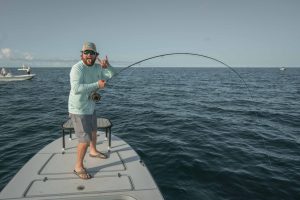
A pretty cast at 100 feet is absolutely not needed in this game. The key is to get the fly in the water and strip.. FAST. The fish will hit and ultimately hang themselves when they shoot straight down at 40 mph. Never lift the rod tip above waist level, keep the tip in the water if you have too. Fight the fish with the butt section of the rod and keep your hands clear of the reel when they take off. I’ve seen busted knuckles, bent reel frames, line wrapped around hands, feet and heads; keep your eyes open and hold on for the ride!
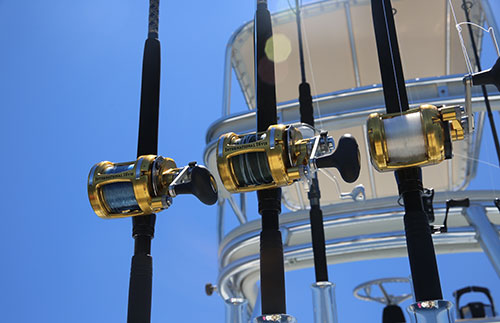
Rods range from 6-10 weight rods depending on the size of the fish. Either an intermediate line or a weight forward floating line will work. A baitfish style fly is mainly what’s used and the size can range from #2/0-6 depending on the size of bait. Come prepared with a 20# fluorocarbon leader and plenty of flies!
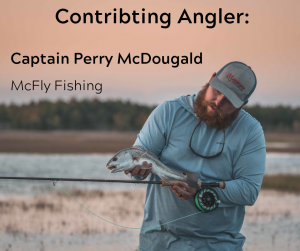
When you get the fish to the boat, grab them hard by the tail and wait for them to start shaking, it’s pretty comical actually. Snap a photo if you’d like then throw them head first into the water. They need water pushed through their gills in order to keep going so don’t be too gentle about it, they’re tough boogers I promise.
So keep an eye out for the butterflies, it’s a tell-tale sign that the albies are about to go off!
You may be interested
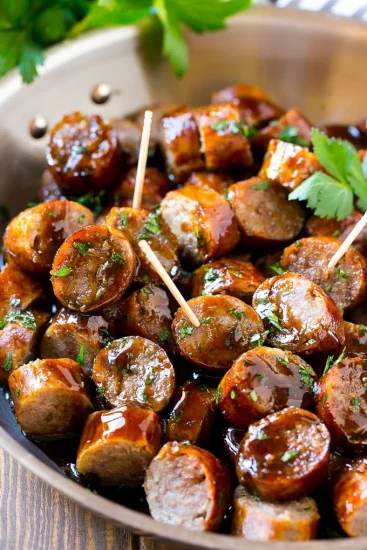
Berr Side Kicks…..Homemade Beer Brat Bites
Tim Wilson - October 16, 2026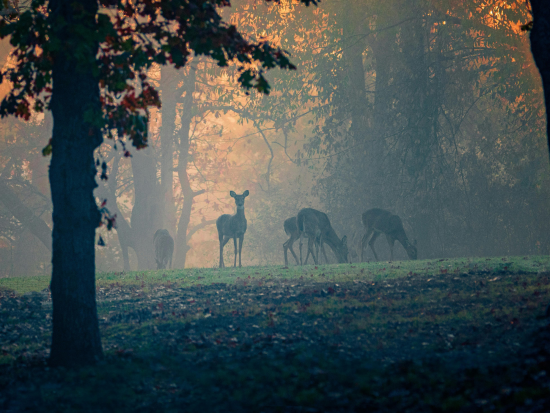
When the Deer Woods Change
Tim Wilson - October 16, 2026The deer woods you hunted in early October may look familiar when November arrives, but the reasons deer use them can change considerably. Across North Carolina, South…
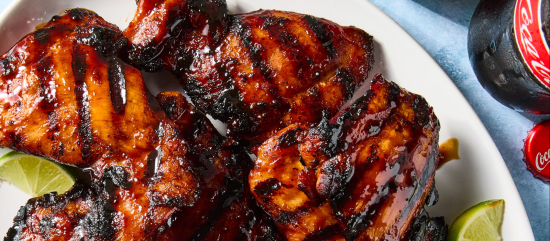
Greatest Of The Grill…..Grilled Coca-Cola Chicken
Tim Wilson - October 16, 2026Everything is better with a Coke… including chicken. Tangy, sweet, and savory, this grilled Coca-Cola chicken will hit every one of your taste buds. If you’re searching…
Most from this category