Prepping For A Day Of Inshore Fishing
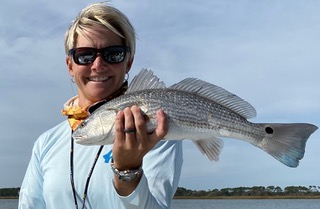
A successful day fishing almost always starts the day before the actual fishing trip. This is when those all-important plans and preparations are made that make sure that the coming day of fishing is the most it can be. These preparations save precious fishing time in addition to making your fishing far more productive.
First, I start with knowing what the weather and tides are going to do. It’s about far more than the obvious. Sure, I check the wind to make sure my safety concerns are covered. But, the winds also determine where and when I fish. If I’m fishing in a shallow creek around low tide, the winds can blow the water out of that creek far sooner than expected and such that I become trapped at low tide. I also check for the potential of lightning. Any threat of dangerous foul weather will determine where I fish and the time of day I fish there. I’ll never leave myself a long run back to the boat ramp if I know there’s a good chance of lightning. At the same time, the tides will determine where I start and end my day. With the extreme high tides around my hometown of Charleston, SC this is especially important.
Next, I check the satellite maps looking for new areas that appear to be fishable and eliminate those that don’t seem to be as enticing. This enables me to spend more time fishing the productive areas and waste less time fishing less productive or less proven areas. I also evaluate these new areas factoring in the information on tides and weather to layout my coming day in a much more organized and effective way rather than a “hit and miss” approach.
Next, I do a safety check on my boat and gear, making sure that everything is working properly. This includes not only my outboard engine but also my trolling motor. I check it to make sure the battery is fully charged and ready for what can be a long day of use and fishing. The loss of the trolling motor can not only impact your fishing capability but the length of time you can fish. Without a fully working trolling motor your fishing location options are greatly reduced.
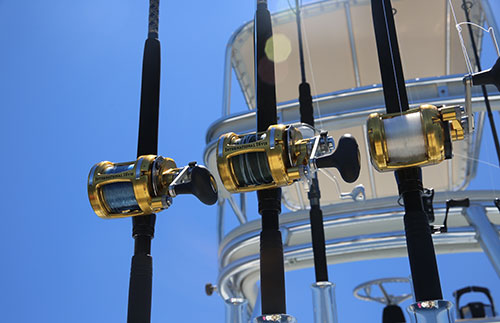
Finally, I check my gear. Where I am fishing and what I am fishing will determine what I prepare. If I’m fishing solo, which I commonly do, I prepare six to eight rods. The rigging is all varied which gives me a number of options depending on where I am fishing, what’s biting as well as the tides and water clarity. For example, I will have a rod rigged with a popping cork, another with a paddle tail plastic, and another with a weedless setup. I would also have a variety of dark colors and light colors that allow me to adapt to the change of water clarity with the change of fishing location. These variations give me a wide array of options that helps determine what the fish are doing.
In short, pre-fishing day prep is a must, allowing me to better adapt to the fishing conditions that day. It saves valuable fishing time and eliminates the problems that can occur with any lack of preparation. It’s a good habit to have or develop.
You may be interested
Offshore Ocean Conditions
Tim Wilson - August 28, 2026Get the latest offshore conditions and forecast from the RROFFS Ocean Forecasting Service.....Know Before You Go!!!!! https://www.youtube.com/watch?v=2VSfkFuFJgI https://www.youtube.com/watch?v=LDfGTQ08r-E
North Carolina’s Inshore Issues…..Chapter Four… When Management Decisions Reach the Dock
Tim Wilson - August 28, 2026The impact of fisheries management decisions is often discussed through statistics, reports, and population estimates, but the true effect of those decisions is experienced at the dock.…
The Hottest Inshore Fishing Boats in the Carolinas
Tim Wilson - August 27, 2026Walk down a Carolina boat ramp on a Saturday morning and you don't have to wonder what kind of boats inshore anglers prefer. The answer is sitting…
Most from this category