GPS Trolling Motor… Inshore Fishing’s Game Changer
If you’ve spent any time on Carolina’s inshore waters recently, you’ve probably noticed something different about the boats around you. Fewer anchors hitting the water, fewer anglers frantically repositioning against tidal current, and more fishermen spending their time actually fishing rather than fighting their boat. The reason is GPS trolling motor technology, and it has fundamentally changed the way serious inshore anglers approach Carolina’s flats, creeks, and estuaries.
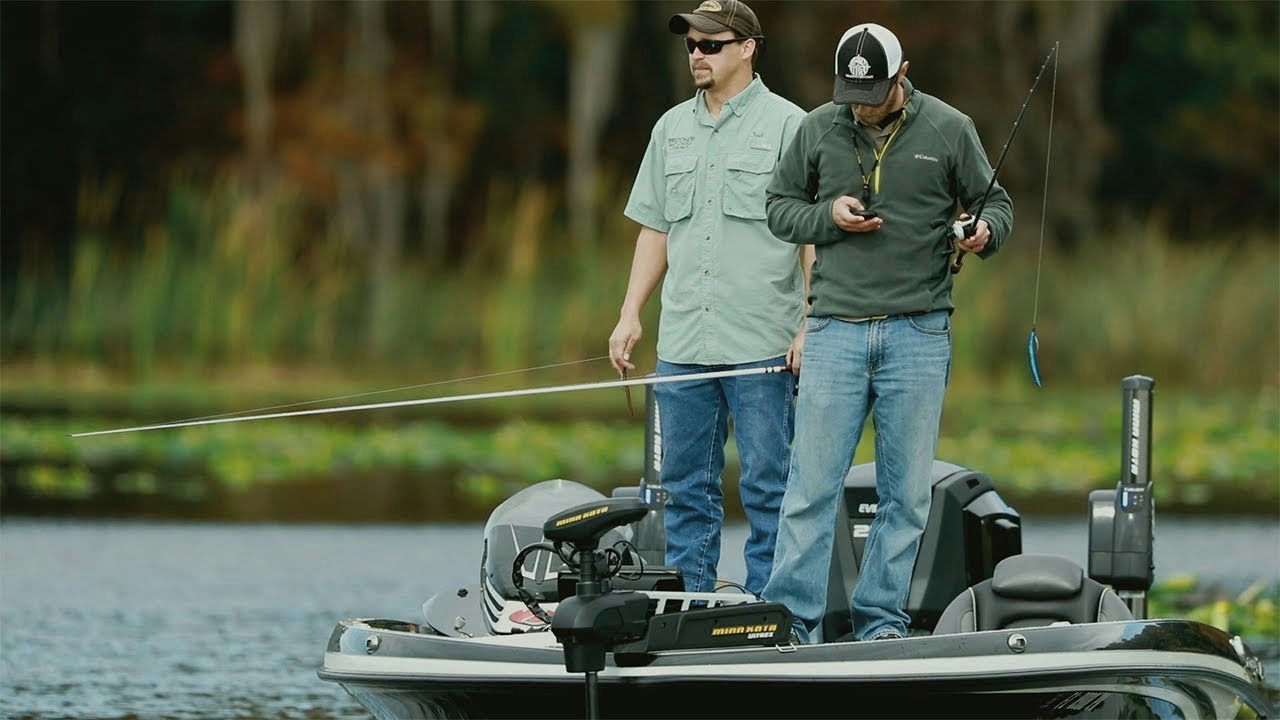
The technology at the center of this revolution is GPS anchor mode, marketed by Minn Kota as Spot-Lock and by Motorguide as GPS Anchor. The concept is straightforward, hold a precise GPS position automatically regardless of wind, current, or tide, but the execution is remarkable. Modern systems update position dozens of times per second, making micro-corrections that keep a boat within a few feet of a chosen coordinate without any input from the angler. What used to require constant attention and physical effort now happens invisibly while you focus entirely on the fish.
![What is Spot Lock? [GPS Boat Anchor EXPLAINED]](https://i.ytimg.com/vi/xKVPomG-OHk/maxresdefault.jpg)
For Carolina inshore anglers, this matters enormously. The Carolinas present some of the most current-heavy inshore environments on the East Coast. Tidal exchanges through narrow creek systems, wind-driven flat conditions, and the constantly shifting water movement through marsh grass edges have always made precise boat positioning one of the most demanding aspects of inshore fishing. A redfish working a grass edge or a speckled trout holding in a current seam requires a presentation delivered to within inches of the strike zone, repeatedly, without spooking the fish with boat noise or movement. GPS anchor mode makes that possible in a way that traditional anchoring and manual motor control never could.
The practical applications go well beyond simple boat holding. Spot-Lock allows anglers to drift a specific contour line automatically, following the edge of a grass flat or a creek channel at a controlled rate while casting parallel to the structure. This technique, nearly impossible to execute consistently with traditional equipment, produces exceptional results on Carolina redfish that patrol specific depth transitions. The ability to hold position in tidal current that would previously have required constant motor bursts, each one potentially spooking fish in clear shallow water, has made sight fishing in the Carolinas dramatically more productive for anglers who have made the investment.
The latest generation of systems adds capabilities that would have seemed extraordinary just a few years ago. Minn Kota’s Spot-Lock Jog feature allows anglers to move their held position in precise increments using a wireless remote or foot pedal, repositioning by a few feet without restarting the positioning sequence. This means covering water methodically along a productive shoreline without ever breaking the fishing rhythm. Motorguide’s competing system offers similar functionality with comparable precision, and both have matured significantly in their ability to handle the strong tidal currents common throughout Carolina’s coastal waterways.
The investment is substantial, quality GPS trolling motors with full anchor capabilities run from $800 to over $2,500 depending on thrust rating and feature set, but the anglers who have made the switch are nearly unanimous in their assessment. The combination of reduced physical effort, dramatically improved boat positioning, and the ability to fish water that was previously too current-heavy or shallow to work effectively has made GPS trolling motor technology the most significant equipment advancement in Carolina inshore fishing in a generation. For serious anglers pursuing redfish, speckled trout, and flounder in the creeks, flats, and estuaries that define Carolina coastal fishing, it has simply become essential equipment.

You may be interested
This Week’s Offshore Conditions Forecast
Tim Wilson - September 25, 2026The latest in offshore conditions. Click for full information. https://youtu.be/SZ3JnOloRHE?si=zuBbxUQhw3Gcah63 https://youtu.be/o03wbLuGckI?si=FL1jlf_-gvISsJ8O
Trust and the Future of North Carolina’s Fisheries……Chapter 6
Tim Wilson - September 24, 2026The conflict surrounding North Carolina’s marine fisheries has never been only about fish. For many fishermen, it is also about whether the people making decisions understand what…
An Angler Looks At 70
Tim Wilson - September 24, 2026Growing up in the foothills of North Carolina, fishing was a far cry from fishing on the Carolina coast. However, fishing in my early years is something…
Most from this category
Early Deer Season…. Why September Whitetails Require a Different Strategy
Tim Wilson - September 24, 2026
Follow the Bait….Follow the Bait: Why Finger Mullet Can Tell You Where the Fish Are
Tim Wilson - September 24, 2026