How Old is a 919-Pound Blue Marlin?
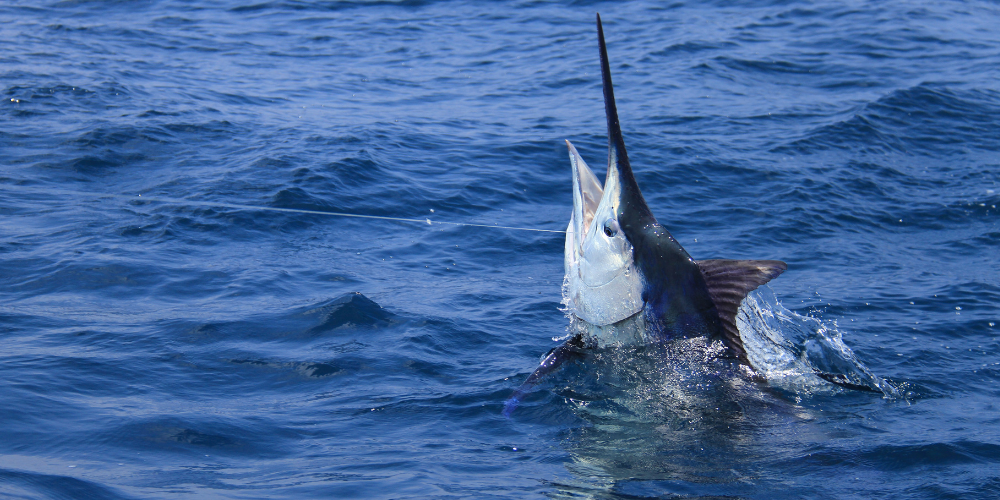
The 68th Big Rock Blue Marlin Tournament is in full swing in Morehead City, and a new tournament record is already on the books. But while the docks buzzed with the weight and the payout figures, we couldn’t help but ask just how old is a fish that size? The answer is more complicated than you might expect.
Fisheries biologists age billfish by examining their otoliths, tiny ear bones that accumulate growth rings much like a tree, as well as by reading the cross-sections of fin spines, which reveal the same annual banding. But rapid early growth means size alone is a poor proxy for age. A blue marlin in the 400-pound range might be anywhere from 7 to 16 years old. A fish pushing 900 to 1,000 pounds represents the upper tier of the species’ life span, likely somewhere between 15 and 25 years old. Even the most colossal specimens, the “granders” as they’re known, can reach their enormous size in as few as two decades thanks to explosive juvenile growth.
 What makes the 919-pound fish especially remarkable is something biologists call extreme sexual dimorphism. Male Atlantic blue marlins rarely exceed 350 to 400 pounds. That means virtually every fish above 300 pounds is female, and fish of this caliber represent the largest, oldest females the species produces. Young females grow three to six feet in their first couple of years and can exceed eight feet by age nine.
The fact that these animals make it to our waters at all is its own story. Atlantic blue marlin are highly migratory, riding the Gulf Stream north each summer into the warm offshore waters of the North Carolina coast. That is precisely what makes Big Rock possible, and what makes our coast one of the premier billfish destinations in the world.
Big Rock has long understood that spectacle and stewardship go hand in hand. The overwhelming majority of fish hooked during the tournament are released alive. Only fish meeting strict minimum weight thresholds ever reach the scales, making a landing a rare event. When one does occur, biologists collect otoliths, reproductive tissue, and stomach contents—scientific data that simply cannot be gathered from a live release.
Meanwhile, the tournament delivers an outsized benefit to Carteret County. Big Rock week can account for up to a quarter of annual revenue for some local businesses, flooding restaurants, hotels, and waterfront shops with the energy and spending that officially kick off summer. Through the Big Rock Foundation, millions more flow back into community programs, hospital upgrades, and conservation initiatives.
For those of us who care deeply about our coast, it is a week that delivers on every level.

You may be interested
North Carolina Marine Fisheries A System in Trouble: Chapter 5
Tim Wilson - September 17, 2026The Disappearing Working Waterfront A working waterfront is more than a place where boats are tied to a dock. It is a living connection between the people,…

Welcoming The Early Deer Season
Tim Wilson - September 17, 2026September deer hunting bears little resemblance to hunting the rut in November. Carolina whitetails haven't suddenly abandoned their normal routines to search for does, and hunters who…
From Spanish to Kings….How Long Will the Nearshore Mackerel Bite Last?
Tim Wilson - September 17, 2026September may signal the beginning of fall, but Carolina ocean waters don't suddenly cool because the calendar changes. For fishermen targeting Spanish and king mackerel, that means…
Most from this category